
Clearing established blackberry bushes is very different from cutting grass or light weeds. The canes become woody, tangled and difficult to access, while the thorny growth can quickly turn a simple clearing job into a demanding one. Choosing the right brush cutter for blackberries therefore depends on the density of the vegetation, stem size, terrain, access and the amount of land to be cleared.
Understanding blackberry challenges
Blackberries are persistent plants because cutting the visible canes does not necessarily eliminate the root system. New shoots can emerge from established roots, meaning that cutting the vegetation once is often only the first stage of control.
The canes themselves also present a practical challenge. Mature stems can become thick and woody, while dense thickets make it difficult to move through the area safely. Small garden pruners are generally unsuitable for extensive growth. Loppers can be useful for isolated heavy stems, but a brush cutter is more efficient when large areas need to be cleared.
Regrowth is another important consideration. Repeated cutting during the growing season can help weaken established plants over time, but the appropriate approach depends on the site and the level of control required. Where complete removal is the objective, cutting may need to be combined with other methods, such as stump or root removal and, where appropriate, professionally selected herbicide treatments.
Timing also matters. Dormant periods, typically late autumn through early spring depending on local conditions, can make mechanical clearance easier because vegetation is less actively growing. However, the best timing depends on the site, the species present and the intended follow-up treatment.
The key point is simple: clearing blackberry is usually an ongoing management task rather than a one-pass job. A suitable machine can make the initial clearance much faster, but follow-up work is often necessary to manage regrowth.
Essential features for blackberry brush cutters
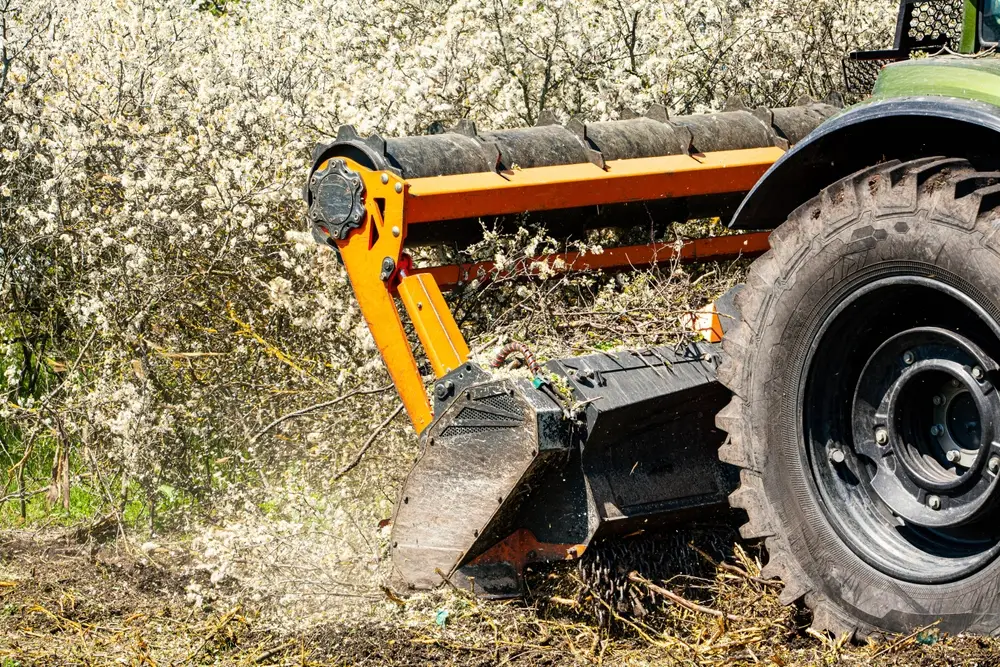
A brush cutter used in dense brambles needs to cope with woody stems, uneven ground and hidden obstacles. Engine or motor output is important, but it should not be the only factor considered.
Power and cutting capacity
For substantial blackberry growth, a higher-powered machine is generally preferable because it can maintain cutting performance under load. Petrol models in the 40 cc and above range are commonly better suited to demanding brush work than lightweight grass trimmers.
Battery-powered brush cutters can also be effective for smaller areas and locations where reduced noise or local emissions are important. Their practical limitation is usually battery capacity and the availability of spare batteries for longer jobs.
Rather than choosing a machine solely by engine size, consider the actual stem diameter, vegetation density and working time required.
Ergonomics and operator control
Blackberry clearance can involve several hours of repetitive work. A suitable harness, balanced shaft and ergonomic handle arrangement can make a significant difference to operator fatigue.
Bike-style handles can provide useful control when sweeping through dense vegetation, while loop handles may be preferable where access is restricted. On slopes or uneven terrain, machine balance and operator control become particularly important.
Durability
Dense vegetation often hides stones, wire, stumps and other debris. A brush cutter intended for heavy brush should therefore have a robust shaft, gearbox and suitable protective guard.
Regular inspection is equally important. Cutting components should be kept in good condition and replaced or sharpened according to the manufacturer’s instructions.
Interchangeable cutting equipment
The ability to use different cutting attachments makes a brush cutter more versatile. Depending on the machine and manufacturer’s approval, this may include:
- Metal brush blades for woody stems and dense brush
- Reinforced trimmer line for lighter vegetation and finishing work
- Multi-tooth blades for mixed brush conditions
- Circular saw blades for heavier woody growth on machines specifically designed to accept them
Always use only attachments approved for the particular brush cutter. The machine’s operating instructions determine which cutting heads, blade sizes and diameters are suitable.
Comparing brush cutter types for blackberries
The best machine depends largely on the size and accessibility of the area.
Handheld brush cutters
Handheld machines are versatile and easy to manoeuvre around fence lines, gardens, paths, banks and restricted areas. With an appropriate engine and cutting attachment, they can handle substantial blackberry growth.
Their main limitation is operator fatigue. Carrying the machine for several hours can become demanding, particularly on steep or uneven ground.
Best suited to: small areas, awkward access and detailed clearing work.
Backpack brush cutters
Backpack models place the engine or motor on a harness, transferring more of the machine’s weight away from the cutting head and shaft. This can make longer clearing sessions more manageable.
They are useful for medium-sized areas and sloping ground, although dense vegetation can sometimes catch on the operator or harness.
Best suited to: medium areas where mobility and working endurance are important.
Wheeled or walk-behind brush cutters
Walk-behind brush cutters provide a more substantial cutting platform and are designed for clearing larger areas of heavy vegetation. Their wider cutting path can significantly reduce the number of passes required across an open field.
The trade-off is manoeuvrability. They are less suitable for narrow paths, tight spaces, steep or highly irregular terrain.
Best suited to: large, relatively accessible areas with dense vegetation.
Brush cutter suitability by job size
| Type | Small Patch | Medium Area | Large Field |
| Handheld | Excellent | Suitable | Limited |
| Backpack | Suitable | Excellent | Possible |
| Wheeled | Limited | Suitable | Excellent |
The table is a starting point rather than a strict rule. Terrain, access, vegetation density and the required finish can change which machine makes the most sense.
Gas vs electric brush cutter performance
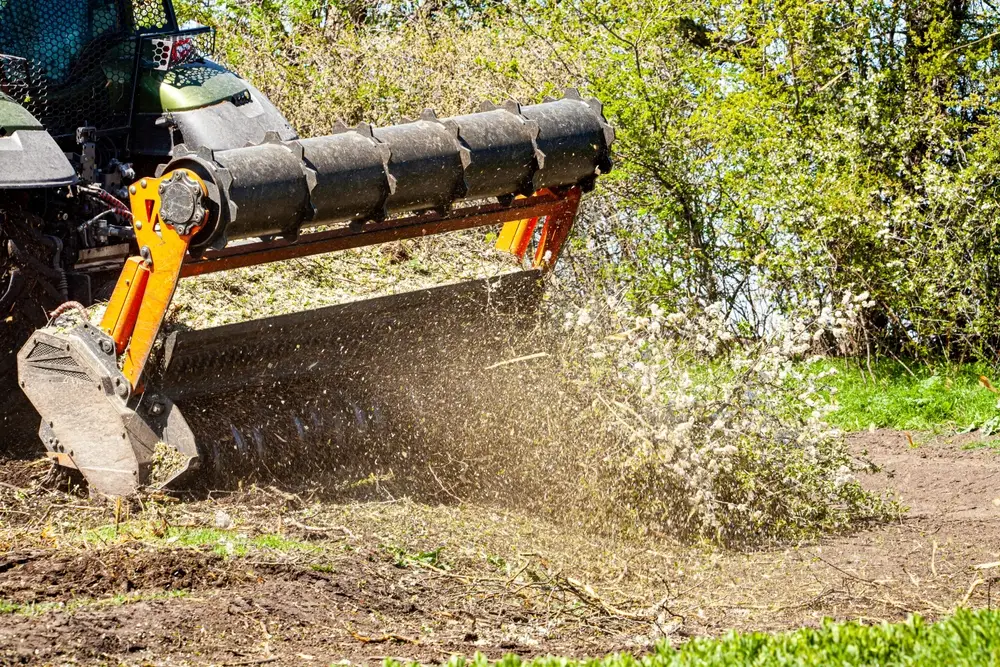
Both petrol and battery-powered brush cutters have a place in blackberry clearance. The right choice depends on the scale and location of the work.
Petrol brush cutters
Petrol machines remain a strong option for large, remote or demanding clearing operations. They provide long operating periods without waiting for batteries to recharge and are available in a wide range of power levels.
The disadvantages include engine noise, fuel management and more regular mechanical maintenance. Operators should follow the manufacturer’s requirements for fuel, air filters, spark plugs, lubrication and storage.
Battery-powered brush cutters
Modern battery brush cutters can be convenient for smaller or medium-sized jobs. They start easily, generally require less routine maintenance and produce less operational noise than petrol equivalents.
Runtime varies considerably according to the battery, machine, cutting attachment and workload. Dense blackberry growth can consume considerably more energy than light grass cutting, so having additional charged batteries may be necessary for continuous work.
| Feature | Petrol Brush Cutter | Battery Brush Cutter |
| Heavy-duty performance | Strong | Varies by model |
| Runtime | Long with fuel available | Limited by battery capacity |
| Maintenance | More involved | Generally simpler |
| Noise | Higher | Lower |
| Mobility | Excellent | Excellent for cordless models |
| Best use | Large or remote jobs | Small to medium jobs |
For a large blackberry infestation, petrol equipment or a high-output battery system is generally more practical than a lightweight cordless trimmer.
Selecting the right blade and string for brambles
The cutting attachment should match both the vegetation and the machine. Using the wrong attachment can reduce cutting performance, increase wear or create unnecessary safety risks.
Metal blades
For mature, woody blackberry canes, an appropriate metal brush blade is usually more effective than standard nylon line. Different blade designs suit different vegetation densities:
- Three-tooth blades: useful for many types of woody brush
- Brush knife blades: suitable for cutting vines and dense vegetation
- Multi-tooth blades: useful for mixed vegetation and heavier brush
- Chisel-tooth blades: intended for particularly demanding woody growth when approved for the machine
- Circular saw blades: designed for heavier woody material and require a compatible machine and experienced handling
The correct choice depends on the manufacturer’s recommendations and the actual conditions on site.
Reinforced trimmer line
Heavy-duty line can be useful for lighter blackberry shoots, grass and finishing work. It can also be preferable where the ground contains hidden obstacles that make metal blades unsuitable, provided the machine and line are designed for the application.
Standard grass-trimmer line is generally not the best choice for mature woody blackberry canes. It can wear or break quickly when subjected to heavy brush.
Matching the attachment to the work
A practical approach is often to use a metal blade for the initial clearance of mature brambles and then switch to a suitable line head for lighter vegetation or finishing, where the machine allows this.
Before starting, check the manufacturer’s instructions for the approved cutting attachment, maximum blade diameter, guard requirements and operating procedure. Wear the required protective equipment and establish a safe working area, particularly where stones, wire, fencing or other hidden obstacles may be present.
Ultimately, the best brush cutter for blackberries is not necessarily the most powerful model available. It is the machine that provides enough cutting capacity for the vegetation while remaining appropriate for the terrain, access, area size and working conditions. For extensive or difficult sites, selecting the right equipment at the outset can make the difference between a controlled clearance operation and a long, inefficient job.