
Choosing between renting and buying heavy forestry equipment is not simply a question of comparing a rental rate with a purchase price. The better option depends on how often the machine will be used, how long it will remain productive for your business, how much downtime you can tolerate and who will be responsible for maintenance, transport and repairs.
A machine that works every week on long-term contracts may justify ownership. The same machine may be difficult to justify if it is only needed for a few specialist jobs each year.
The most reliable way to make the decision is to look at the total cost of ownership, the expected utilisation and the operational risks associated with each option.
Understanding total cost of ownership
Total cost of ownership (TCO) looks beyond the initial price. For a forestry machine, it can include:
- Purchase or rental cost
- Financing or interest charges
- Fuel or energy
- Routine servicing
- Wear parts and repairs
- Insurance
- Transport
- Storage
- Operator-related costs
- Downtime
- Depreciation
- Resale value
- Opportunity cost of invested capital
This broader view is particularly important in forestry because machines often operate in demanding environments. Mud, dust, steep terrain, heavy vegetation, long working hours and difficult access can all influence wear and maintenance requirements.
What does ownership really cost?
Buying gives you control over the machine, but it also makes you responsible for keeping it productive.
Fuel consumption depends on the machine, attachment, workload, terrain and operating technique. Maintenance costs vary according to the manufacturer’s service requirements, operating hours and working conditions. Components such as tracks, cutting systems, hydraulic components and undercarriage parts can also represent significant costs over the life of a machine.
Depreciation matters as well. A machine with high operating hours or a demanding service history may have a lower resale value than expected. This is why the purchase price alone is not a reliable measure of the financial cost of ownership.
What does renting really cost?
Rental makes the initial commitment smaller, but it is not automatically cheaper.
A rental calculation should include the agreed rental rate as well as delivery, collection, insurance requirements, fuel, damage responsibilities and any other charges specified in the contract.
The major financial advantage is that you generally avoid taking ownership of the asset and therefore do not carry its depreciation or eventual resale risk.
Rental can also preserve working capital. Instead of committing a large amount of cash to a machine, the business can allocate funds to employees, projects, working capital or other equipment.
Buying vs. renting: the cost categories
| Cost factor | Buying | Renting |
| Initial capital | Usually significant | Generally lower |
| Financing | May apply | Usually built into the rental arrangement |
| Fuel | Owner’s responsibility | Usually user’s responsibility |
| Routine maintenance | Owner’s responsibility | Depends on rental agreement |
| Major repairs | Owner’s responsibility | Often handled by rental provider, subject to contract |
| Insurance | Usually required | Requirements vary |
| Depreciation | Owner carries it | Not applicable to the renter |
| Resale value | Potential future recovery | None |
| Storage | Owner must arrange it | Usually avoided between rental periods |
| Transport | Usually arranged and paid by owner | May be available as part of the service |
| Downtime risk | Primarily managed by owner | May be reduced through repair or replacement support |
The exact allocation of these costs should always be confirmed in the rental agreement rather than assumed.
Comparing rental and purchase costs
The most useful comparison is based on the same period and the same expected workload.
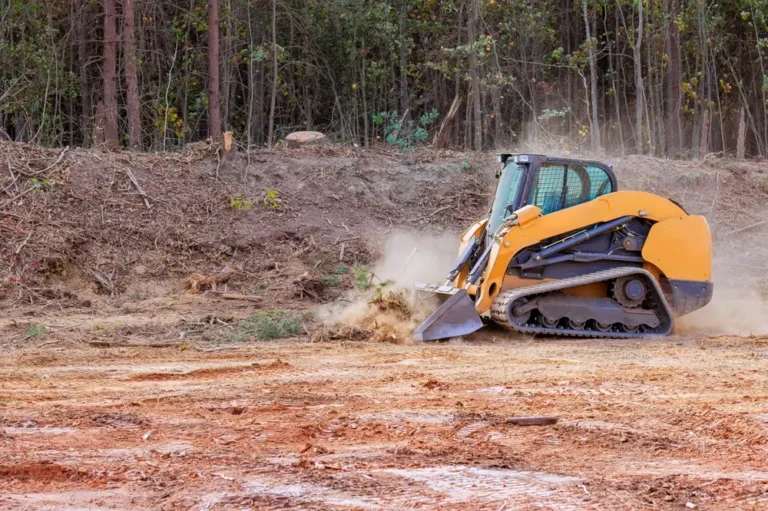
For example, suppose a contractor needs a tracked mulcher for a three-month vegetation clearance project. Buying the machine means paying for the asset and then managing its ownership beyond the project. Renting may allow the contractor to use the machine only for the period in which revenue is being generated from that particular job.
The calculation changes completely if the same contractor has several years of confirmed work requiring the machine.
A simple ownership calculation
A practical ownership estimate can be structured as:
Purchase price + financing + operating costs + maintenance + insurance + storage + transport − expected resale value
The result can then be compared with the total rental cost for the equivalent period and workload.
This calculation becomes more useful when based on realistic operating hours rather than calendar time alone. Two companies can own the same machine for five years and experience very different economics if one operates it hundreds of hours more each year.
Do not rely on a universal utilisation threshold
It is common to see advice suggesting that buying becomes preferable once a machine is used for a particular percentage of the year. Such rules can be useful as rough starting points, but they are not reliable enough to make the decision on their own.
The break-even point depends on:
- Rental rates in your area
- Purchase price and financing terms
- Annual operating hours
- Maintenance and repair costs
- Expected resale value
- Machine productivity
- Transport requirements
- Storage costs
- Insurance
- Downtime exposure
- Contract length
- Tax treatment in your jurisdiction
A machine used frequently can still be uneconomical to own if it requires expensive maintenance or has limited productive value. Conversely, a machine with moderate utilisation may make sense to purchase if rental availability is poor and downtime would seriously affect your contracts.
Project duration and equipment utilisation
How long you need the machine is one of the first questions to answer.
When renting can make sense
Rental is particularly useful for short-term or uncertain work.
You may want to rent when:
- A project is temporary or one-off.
- Your workload changes significantly from season to season.
- You need a specialist machine for only a few jobs.
- You need additional capacity during a busy period.
- You are testing a machine before considering a purchase.
- Your business does not have suitable storage facilities.
- A project is taking place far from your normal operating base.
- You want to avoid owning equipment that will remain idle between contracts.
For example, a land-clearing contractor may normally operate with a small fleet but require an additional high-capacity mulcher for several weeks during a major contract. Renting that additional machine can provide the required capacity without permanently increasing the fleet.
When buying may make sense
Ownership becomes more attractive when a machine has a predictable workload and is central to daily operations.
Buying may be worth considering when:
- The machine is required regularly throughout the year.
- You have recurring work for the same type of equipment.
- Rental availability is unreliable in your operating area.
- Your team already has the skills and infrastructure to maintain the machine.
- You need complete control over machine availability.
- The machine has a long expected productive life within your operation.
- You have sufficient capital or suitable financing.
- The expected ownership cost compares favourably with repeated rental costs.
The important question is not simply, “How often will we use it?” Ask instead:
“How many productive hours will this machine generate, and what will each productive hour cost us?”
That calculation provides a much clearer basis for comparing ownership with rental.
Maintenance, repairs, and downtime
Maintenance is one of the biggest differences between owning and renting forestry equipment.
The responsibilities of ownership
When you own a machine, you control when and how it is maintained, but you also carry the responsibility.
That may include:
- Scheduled servicing
- Fluid and filter changes
- Wear-part replacement
- Hydraulic inspections
- Cutting-system maintenance
- Track or tyre maintenance
- Electrical and control-system checks
- Troubleshooting
- Unplanned repairs
- Parts procurement
- Technician costs
For a company with experienced technicians and an established maintenance system, this can be manageable. For a smaller contractor, however, repair work can consume valuable time and delay projects.
What changes when you rent?
Rental agreements vary, but many providers handle some or most scheduled maintenance and major mechanical issues. The precise responsibilities should be established before signing the contract.
The potential benefit is operational rather than simply financial: if a machine develops a problem, the rental provider may be able to arrange technical support, repair or replacement depending on the agreement and equipment availability.
That can be particularly important on remote forestry sites, where transporting a disabled machine back to a workshop can be expensive and time-consuming.
Downtime deserves its own calculation
Downtime is often overlooked when comparing rental and ownership.
Suppose a machine normally generates revenue when operating. A breakdown can therefore create more than a repair bill. It may also lead to:
- Lost productive hours
- Delayed site work
- Additional transport costs
- Rescheduling of operators
- Delayed invoices
- Potential contractual consequences
For an owned machine, the business generally carries this risk directly. With a rental machine, the contract and provider’s support arrangements may reduce some of the exposure, but they cannot eliminate it entirely.
Before renting, check what happens if the machine becomes unavailable, particularly for remote or time-critical projects.
Flexibility, technology and equipment access
Forestry work changes from project to project. One contract may require a mulcher, another a felling machine, and another a machine capable of working on difficult terrain.
This is where rental can provide considerable flexibility.
Access to specialist equipment
Instead of maintaining every machine type in your own fleet, you can rent equipment for specific requirements.
This can be useful for:
- Mulching
- Land clearing
- Forestry felling
- Vegetation management
- Stump removal
- Site preparation
- Right-of-way clearance
- Specialist attachments
The approach allows a contractor to build the equipment package around the job rather than forcing every project to fit the existing fleet.
Trying equipment before buying
Rental can also be a practical way to evaluate equipment in real working conditions.
A machine may look suitable on paper but perform differently once it reaches an actual forestry site. Operator visibility, attachment response, manoeuvrability, fuel consumption, productivity and maintenance access all become easier to assess during real work.
If a company is considering a major purchase, a properly planned rental trial can provide useful operational information before capital is committed.
Scaling the fleet
Rental can help contractors respond to temporary increases or decreases in workload.
For example:
- Peak demand: add equipment for a major contract.
- Reduced workload: return machines that are no longer required.
- New service: rent specialist equipment before investing in a dedicated machine.
- Changing projects: choose different machines or attachments as requirements evolve.
This flexibility can be valuable for contractors whose workload is seasonal or project-driven.
Tax, accounting and financing considerations
Tax treatment should not be used as a universal argument for either renting or buying.
The financial treatment of equipment purchases and rentals varies by country, business structure, accounting method and current tax legislation. Depreciation rules, capital allowances, deductions, financing costs and rental expenses may all be treated differently.
For this reason, businesses should calculate the operational economics first and then discuss the tax implications with their accountant or tax adviser.
Financing also changes the ownership calculation. A machine purchased with borrowed capital has a different cash-flow profile from one bought outright, while financing rates and terms can materially affect the overall cost.
The relevant comparison is therefore the actual cost to your business under the specific financing, rental and tax arrangements available to you.
Conclusion
There is no universal answer to the question of whether forestry equipment should be rented or purchased.
Renting can provide flexibility, lower initial capital requirements and access to specialist equipment without taking on long-term ownership responsibilities. It can be particularly useful for temporary projects, seasonal demand and changing equipment requirements.
Buying can provide long-term control and availability when a machine has a consistent workload and the business is prepared to manage maintenance, storage, financing, insurance and depreciation.
The most useful comparison is therefore not the rental rate versus the purchase price. It is the total cost of having the machine available and productive for the work you actually have.
Before committing to either option, estimate realistic operating hours, maintenance requirements, downtime exposure, transport costs, financing, storage and expected resale value. Then compare those figures with the complete rental cost and the terms offered by the provider.
For heavy forestry equipment, the right decision is ultimately the one that fits the machine to the workload, the business’s cash flow and its ability to manage operational risk.