
Choosing between a 2-stroke and 4-stroke brush cutter is not simply a question of which engine produces more power. The right choice depends on the type of vegetation, the size of the job, how long you will use the machine, its weight and balance, and how you want to handle maintenance.
Both engine types can be effective. The differences become much clearer when you consider how they behave during real work.
Understanding 2-stroke and 4-stroke engines
The main difference is how each engine completes its combustion cycle.
A 2-stroke engine completes its cycle in two piston strokes and produces a power stroke on every crankshaft revolution. Its relatively simple construction provides a good power-to-weight ratio, which is one reason 2-stroke engines are widely used in handheld outdoor power equipment.
A 4-stroke engine completes the cycle over four piston strokes: intake, compression, power and exhaust. It produces a power stroke every two crankshaft revolutions. The design includes additional components such as valves and a camshaft, and the engine normally uses separate fuel and engine oil.
Fuel and lubrication are also handled differently:
- 2-stroke: fuel and the specified 2-stroke oil are mixed according to the manufacturer’s ratio, unless the machine uses another manufacturer-approved lubrication system.
- 4-stroke: petrol and engine oil are kept separate, with engine oil circulating through a dedicated lubrication system.
Getting the fuel mixture wrong on a conventional 2-stroke can cause poor running or engine damage. With a 4-stroke, regular oil-level checks and oil changes are part of normal maintenance.
There are also engine designs that do not fit neatly into the traditional comparison. Some manufacturers use hybrid or four-stroke-derived systems with their own fuel and lubrication requirements. Always follow the instructions for the specific machine rather than assuming its maintenance requirements from the engine label alone.
Power, torque, and performance in real-world use
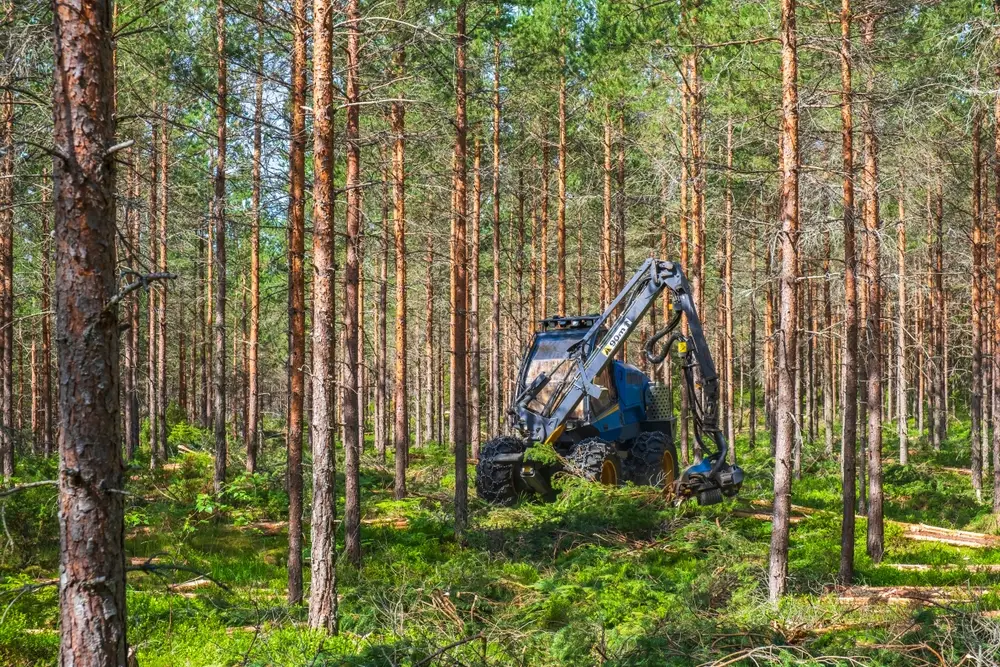
For brush cutting, engine performance is about more than peak horsepower. What matters in practice is how the machine responds to the cutting attachment, vegetation and workload.
A 2-stroke brush cutter is often valued for its relatively low weight and responsive power delivery. This can make it convenient when working around trees, fences, posts and other obstacles or when carrying the machine across uneven ground.
A 4-stroke brush cutter generally has a different power delivery and can provide strong torque at lower engine speeds. This can be useful when working through heavier vegetation, although the actual performance depends on engine size, gearing, cutting attachment and machine design.
Rather than choosing an engine type solely because it has a particular horsepower figure, consider the complete machine. A well-matched cutting head and engine can have a greater practical impact on productivity than a small difference in advertised power.
| Factor | 2-Stroke | 4-Stroke |
| Power-to-weight ratio | Often favourable | Usually lower because of added engine components |
| Power delivery | Responsive, high-revving | Generally smooth and torque-oriented |
| Heavy vegetation | Effective when correctly sized | Can be well suited to sustained cutting loads |
| Fuel system | Fuel/oil mixture typically required | Fuel and engine oil are separate |
| Weight | Often lighter | Often heavier |
| Typical use | General brush cutting and jobs where manoeuvrability matters | Longer or heavier-duty work where the extra weight is acceptable |
These are general tendencies rather than guarantees. Always compare the specifications of the actual models you are considering.
Weight, balance, and portability
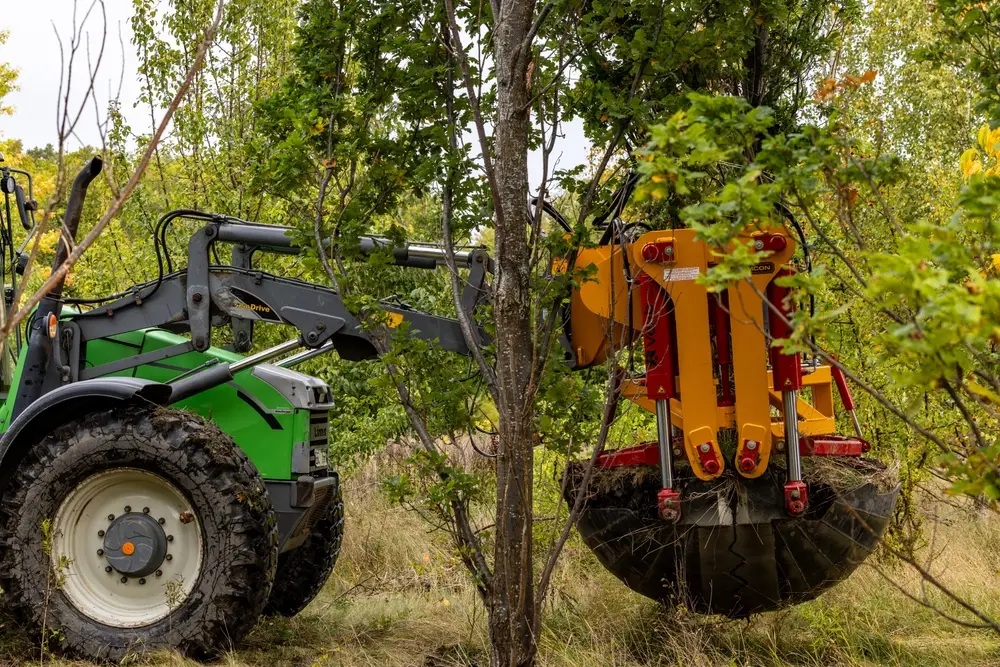
Weight becomes particularly important when a brush cutter is used for several hours, carried over slopes or repeatedly repositioned around obstacles.
A lighter 2-stroke model can be easier to manoeuvre and may place less physical demand on the operator. This can be an advantage when trimming around trees, fence lines or difficult-to-access areas.
Four-stroke models are generally heavier because of their additional engine components and lubrication system. That extra weight can become noticeable during long sessions, particularly on steep or uneven terrain.
However, total weight is only part of the equation. Balance and harness adjustment can make a significant difference to how a machine feels in use. A well-balanced brush cutter can be easier to control than a lighter machine with poor weight distribution.
Do not assume that every 4-stroke machine must remain in one particular storage position or that every 2-stroke machine can safely be stored at any angle. Storage and transport instructions vary by model. Follow the manufacturer’s guidance to prevent fuel or oil leaks and other problems.
When comparing machines, look at:
- Dry weight and operating weight
- Harness or shoulder-strap design
- Handle position and adjustment
- Cutting-head compatibility
- Overall balance
- Transport and storage requirements
- The terrain where the machine will be used
Fuel use and operating considerations
Fuel consumption depends on much more than whether an engine is 2-stroke or 4-stroke. Engine size, throttle use, vegetation density, cutting attachment, maintenance and working technique all affect fuel use.
A 2-stroke requires the correct fuel-oil mixture, which means accurate measurement and suitable storage of prepared fuel. The exact ratio must come from the manufacturer’s instructions; using a generic ratio can damage an engine.
A 4-stroke avoids fuel mixing, which some operators find more convenient. It does, however, require regular checks of the engine oil and periodic oil changes.
For professional users, it can be useful to compare fuel consumption under the actual workload, rather than relying on general claims about one engine type being universally more economical.
Maintenance, durability and long-term costs
Maintenance requirements are different, but neither engine type should be described as maintenance-free.
2-Stroke maintenance
Typical tasks may include:
- Preparing fuel with the correct oil specification and ratio
- Checking and replacing the spark plug when required
- Cleaning or replacing the air filter
- Inspecting the fuel system
- Checking the exhaust and cooling areas
- Inspecting the cutting attachment and gearbox
- Following the manufacturer’s service intervals
The simpler engine design can make some mechanical work more straightforward, but high operating speeds and demanding conditions still require proper maintenance.
4-Stroke maintenance
Typical tasks include:
- Checking the engine oil level
- Changing engine oil at the specified intervals
- Checking or replacing the air filter
- Inspecting the spark plug
- Checking valve clearance where required
- Inspecting the fuel system and cooling system
- Maintaining the cutting attachment and gearbox
A 4-stroke has more engine components, so some servicing can be more involved. On the other hand, not having to mix oil into the fuel can make everyday operation simpler.
What does maintenance cost?
There is no reliable universal annual maintenance price. Costs vary according to the machine, operating hours, parts prices, local labour rates and how demanding the work is.
For that reason, compare the manufacturer’s service schedule and parts availability for the actual models rather than relying on a fixed yearly cost.
Claims that one engine type will automatically last longer than the other are also too broad. Service life depends heavily on engine design, workload, maintenance, fuel quality, operating conditions and how the machine is treated.
2-stroke vs 4-stroke: which is right for you?
The best choice depends on how you expect to use the brush cutter.
A 2-stroke may make sense if you prioritise:
- Lower machine weight
- Manoeuvrability
- A strong power-to-weight ratio
- Frequent work around obstacles
- Straightforward engine construction
- Portability between work areas
A 4-stroke may be worth considering if you prioritise:
- Separate fuel and engine oil
- Strong low-speed torque characteristics
- Longer periods of demanding cutting
- Convenient fuel handling
- A machine where the additional weight is acceptable
For occasional garden maintenance, either type may be suitable. For professional land management, forestry or extensive vegetation clearance, the decision should also consider cutting-head compatibility, operator fatigue, service support, spare parts and expected operating hours.
Ultimately, engine type is only one part of the selection process. Match the brush cutter to the vegetation, terrain, workload and operator. A correctly sized machine that is comfortable to handle and properly maintained will generally be more useful in the field than one chosen solely because its engine type looks better on paper.